Visit The Clinic
12B Agoro Odiyan Street, Off Adeola Odeku, Victoria Island, Lagos.
Contact
+234 913 760 0376
info@phoenixderma.com

Microneedling for Acne Scars and Pores Lagos: What to Expect
Acne scars and large pores often linger long after breakouts fade, especially on melanin-rich skin. Many people in Lagos seek safer, effective ways to smooth out scars and achieve more even skin texture. This article explains how microneedling addresses these concerns and what you need to know before considering it.
Microneedling for acne scars and pores in Lagos involves using a device with fine needles to create controlled micro-injuries in the skin, which triggers the body’s natural healing response and boosts collagen production. For many Nigerians with textured, melanin-rich skin, microneedling can help fade acne scars and minimise the look of large pores when performed by a trained professional. Results are gradual and depend on your skin type and the severity of your scarring.
Key takeaways
- Microneedling for acne scars and pores in Lagos uses tiny needles to trigger collagen production, improving skin texture safely for melanin-rich skin.
- Professional microneedling is more precise and effective than DIY dermarollers, especially for textured acne scars and large pores in Nigerian skin.
- Results from microneedling vary by individual but can include smoother skin and reduced appearance of scars and pores after several sessions.
- RF microneedling and PRP microneedling are available in Lagos and may offer enhanced results for certain skin concerns.
- Microneedling is safe for darker skin types when performed by trained professionals using suitable equipment and protocols.
How does microneedling help with acne scars and large pores?
Microneedling helps treat acne scars and large pores by triggering collagen and elastin production, leading to smoother, more even skin texture over time. The micro-injuries stimulate the skin’s repair process, which gradually reduces the appearance of pitted scars and enlarged pores. For Nigerians with melanin-rich skin, this approach is generally safe when performed by an experienced practitioner.
After acne clears, it can leave behind stubborn dark marks, pits, or “craters” in the skin. Large pores, often worsened by oiliness or old acne, give a rougher look to the skin. Microneedling—also called collagen induction therapy—creates tiny channels in the skin’s surface. This encourages new collagen and elastin formation, slowly improving uneven texture, making scars shallower, and tightening enlarged pores. It's a gradual process, with results building over several treatments.
Is microneedling safe for melanin-rich Nigerian skin?
Microneedling is considered safe for melanin-rich Nigerian skin when performed by a trained professional using medical-grade equipment. Proper technique and aftercare minimise the risk of post-inflammatory hyperpigmentation or scarring. Always seek care in a reputable clinic familiar with the needs of darker skin types.
Some treatments—like aggressive lasers or peels—can worsen pigmentation in darker skin. Microneedling, when done correctly, poses less risk because it does not use heat or harsh chemicals. However, inexperienced hands or improper devices can still lead to unwanted dark patches. Choose a clinic that understands the unique responses of Nigerian skin to these treatments.
- Medical microneedling devices allow precise control compared to at-home rollers.
- Pre- and post-care (such as gentle cleansing and sun protection) are essential to reduce complications.
- Practitioners may recommend pre-treatment to calm active acne before starting microneedling.
What is the difference between professional microneedling and dermarollers?
Professional microneedling in Lagos is performed with devices that reach deeper, offer more precision, and are safer for melanin-rich skin than at-home dermarollers. Clinic treatments can target acne scars and pores more effectively, while home rollers are best for mild texture concerns and require strict hygiene.
Clinic-based microneedling uses automated pens or RF devices that penetrate to controlled depths, with sterile, single-use needles. Dermarollers for home use are shallower and lack the precision or safety features needed for deeper scars. Home use increases the risk of infection, scarring, and pigmentation changes—especially if the device is reused or not properly sanitised.
- Professional microneedling is tailored to your skin’s needs and is supervised by a healthcare provider.
- Deeper treatments are possible in clinic, giving better results for atrophic (pitted) scars.
- Clinic treatments include aftercare advice and sterile conditions, reducing risk of complications.
- Home dermarollers may slightly improve surface texture but do not reach the lower layers where scars form.
What happens during a microneedling session in Lagos?
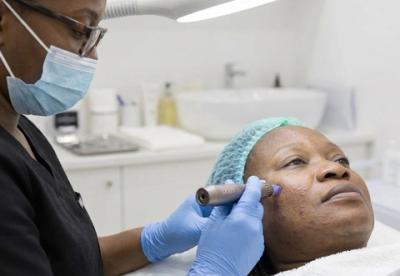
During a microneedling session in Lagos, your skin is cleansed and numbed with a topical cream. The practitioner then uses a device with fine needles to treat targeted areas, followed by a soothing serum or mask. A session lasts 30 to 60 minutes, with mild redness and swelling expected for a day or two.
You might feel mild pricking or tingling, but most people find the procedure tolerable with numbing. After treatment, your skin may look sunburned and feel tight, but this usually settles within a few days. Avoid harsh products and direct sun for at least a week. Your provider may suggest a series of sessions, spaced 4–6 weeks apart, for best results.
How many sessions are needed for noticeable results?
Most people need three to six microneedling sessions spaced about a month apart to see clear improvement in acne scars and large pores. The number depends on the severity of your scarring, your skin’s response, and your skincare routine. Patience is important, as collagen remodelling is gradual.
Shallow scars and mild pore issues might improve after just a few treatments, while deeper pitted scars require more. Results can also vary depending on whether you combine microneedling with other treatments, such as chemical peels or topical serums. Your practitioner will assess your progress and adapt your plan as needed.
What is RF microneedling, and is it available in Lagos?
RF microneedling combines traditional microneedling with radiofrequency energy, enhancing collagen production and tightening the skin. This option is available in some Lagos clinics and may offer greater benefits for deeper scars or laxity. Always confirm the device used is approved for use on darker skin.
RF microneedling uses tiny needles to deliver controlled heat through radiofrequency, stimulating more collagen without damaging the skin’s surface. It is especially useful for mixed acne scars, shallow wrinkles, and mild skin laxity. Recovery is similar to standard microneedling but may involve slightly more swelling. Not every clinic offers this service, so enquire specifically if you are interested.
What about PRP microneedling?
PRP microneedling in Lagos involves applying platelet-rich plasma (from your own blood) to the skin during the procedure, aiming to enhance healing and results. While some people see improved recovery and smoother texture, evidence for added benefit is still emerging. PRP is generally considered safe if done in a regulated clinical setting.
PRP (Platelet-Rich Plasma) is sometimes called a “vampire facial.” Blood is drawn, spun in a centrifuge to concentrate growth factors, and then applied during microneedling. It may help boost collagen and speed up healing, but it is not essential for good results. Discuss with your provider whether PRP is right for your skin goals.
How does the Lagos climate affect microneedling results?
The humid, sunny climate in Lagos means extra care is needed after microneedling to prevent irritation and pigmentation. Use gentle cleansers, moisturisers, and daily sunscreen, and avoid outdoor activities in peak sun hours for at least a week after each session. This helps protect healing skin and supports even results.
High humidity can increase sweating, making skin more prone to irritation and infection right after treatment. Tap water in Lagos may sometimes be harsh, so use bottled or boiled water for washing your face in the first few days. Lagos residents should also be aware that hyperpigmentation risk is higher on melanin-rich skin, so strict sun protection after microneedling is crucial.
- Apply a broad-spectrum sunscreen of at least SPF 30 daily.
- Moisturise frequently to help the skin heal and reduce flaking.
- Avoid makeup, swimming, and heavy sweating for 2–3 days after treatment.
- Follow your provider’s aftercare instructions closely for best results.
When should you see a professional about acne scars or large pores?
If acne scars or large pores affect your confidence or do not improve with good skincare, consult a dermatologist in Lagos. A professional can assess your skin, rule out underlying issues like active acne or pigmentation disorders, and guide you on safe options—including microneedling or other treatments.
What to expect at a microneedling consultation at Phoenix Derma
Phoenix Derma is a dermatology clinic based at 12B Agoro Odiyan Street, Off Adeola Odeku, Victoria Island, Lagos. At a consultation, your skin concerns will be examined in detail and your suitability for microneedling or other procedures discussed. You will also receive guidance on what results are likely and the steps required for aftercare. For more on microneedling, see our hub page or read about how it stimulates collagen in Nigerian skin.
Frequently asked questions
Is microneedling painful?
Microneedling is usually tolerable with the use of numbing cream, though you may feel mild pricking or tingling. Discomfort is brief and fades quickly after treatment. Most people describe the sensation as manageable and return to work or activities the next day.
Can microneedling make acne scars worse?
When performed by trained professionals using sterile equipment, microneedling does not worsen acne scars. However, using unregulated or at-home devices can cause irritation, infection, or even pigmentation changes. Always seek care in a reputable clinic to minimise risks, especially on darker skin.
How long does redness last after microneedling?
Redness usually fades within 24 to 72 hours after microneedling. Some people may have mild swelling or sensitivity for a few days. Proper aftercare, including sun protection and gentle cleansing, helps speed up recovery.
Is there downtime after a microneedling session?
Most people experience mild redness and swelling for up to three days after microneedling. You can usually resume daily activities immediately, though it is best to avoid strenuous exercise, sun exposure, and harsh products for at least a week.
Can microneedling treat hyperpigmentation in Nigerian skin?
Microneedling can help fade post-inflammatory hyperpigmentation and dark marks left by acne. It is generally safe for Nigerian skin when performed by an experienced practitioner, but results vary by individual. Always follow aftercare instructions to reduce risk of new pigmentation issues.
Share this article
Phoenix Derma
Expert dermatology and aesthetic clinic in Lagos, providing professional skin care treatments and wellness solutions. Our team of specialists is dedicated to helping you achieve healthy, radiant skin.
View Our ServicesReady to Transform Your Skin?
Book a consultation with our expert dermatologists and start your journey to healthier, more radiant skin today.
Related Articles
Continue reading to learn more about skin care and dermatology